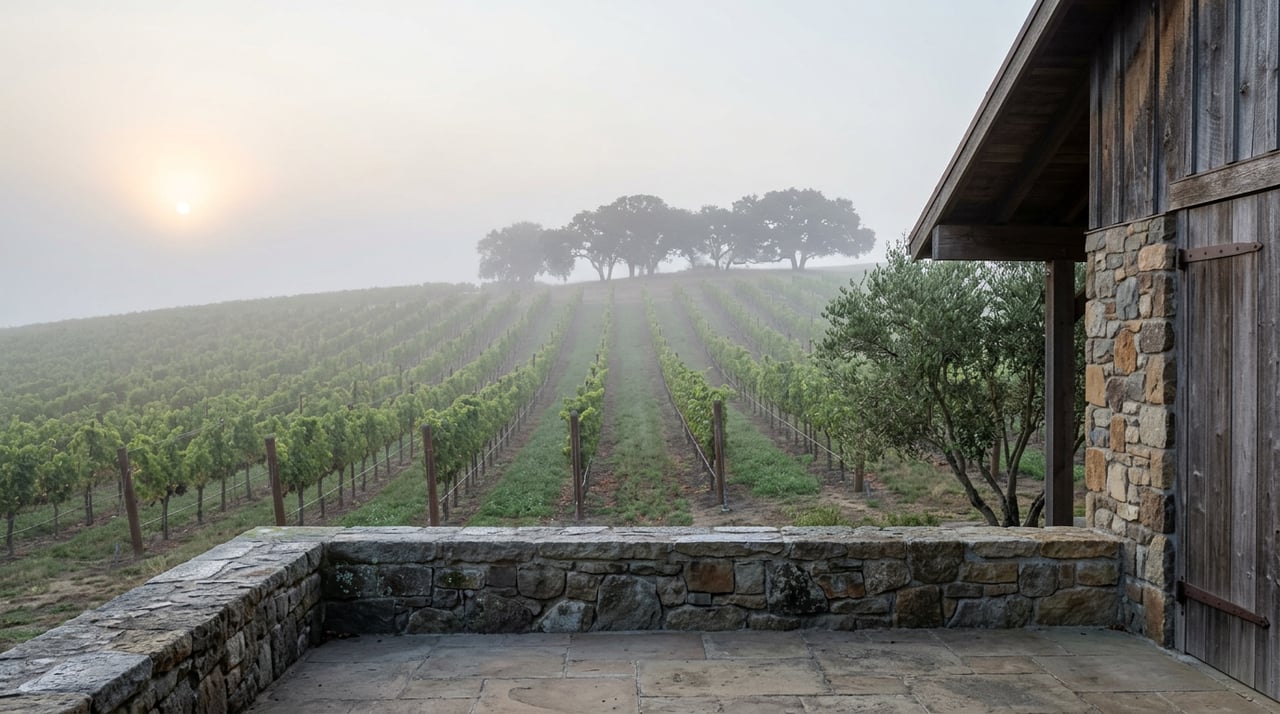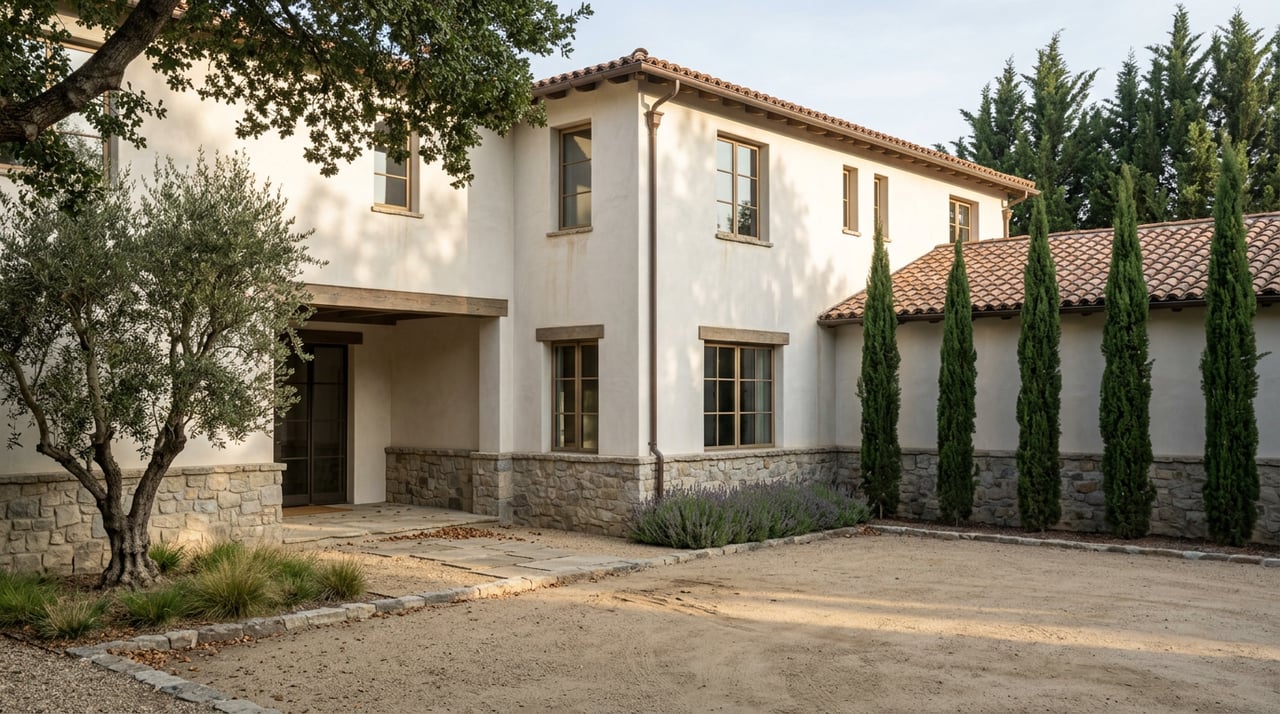
A Calistoga estate goes under contract at full ask. The inspection comes back clean. Then, three weeks before closing, the lender's underwriter sends back a single line: proof of adequate hazard coverage not yet on file. Everyone assumed insurance was a formality, something the buyer's agent would confirm with a phone call. Instead it becomes the reason escrow slips a month, or the reason the deal falls apart entirely.
This is not a story about rising premiums, though premiums are rising. It is a story about a hard ceiling that sits at exactly the price point where Calistoga's higher-value inventory lives, and about how few people learn that ceiling exists until they are already in contract.
The cap, not the cost
California's insurer of last resort, the FAIR Plan, caps residential dwelling coverage at $3 million per building. That figure is not a starting quote that climbs with risk. It is a structural limit. A property with a rebuild cost of $2.4 million fits inside it, however expensive the premium gets. A property with a rebuild cost of $6 million does not fit inside it at any price, because the plan simply will not write a policy that large.
Calistoga's estate and winery stock crosses that line often enough that the cap is not a rare edge case. It is a routine one. A tasting room, a detached wine cellar, a guest house, and a main residence on a single parcel can add up to a rebuild value well north of $3 million even when the listing price looks reasonable next to comparable wine country properties. When that happens, the FAIR Plan is not an option to shop against. It is off the table, and the seller needs a different kind of policy in place before a financed buyer's underwriter ever asks the question.
What actually happened to two Calistoga wineries
The 2020 Glass Fire destroyed or damaged more than two dozen wineries in the corridor between Calistoga and St. Helena, and the aftermath showed what the coverage gap looks like in practice rather than in the abstract. Castello di Amorosa, damaged directly by that fire, could not secure property insurance heading into the following season. Schramsberg, on Diamond Mountain just outside town, saw its own rate jump sharply. Neither outcome was about negligence or an unusual risk profile. Both properties sit in the same wildland-urban interface that defines most of the valley floor and hillsides around Calistoga, an area that shows up on the California Department of Insurance's own list of the state's most fire-exposed counties.
Those two cases matter here because they show the gap is not theoretical for owners of exactly the kind of asset this market trades in: winery estates, private residence compounds, multi-structure parcels with a tasting room or a cellar that reads as a second building on the insurer's worksheet. The 2017 Atlas Fire burned more than 51,000 acres and destroyed 783 structures across Napa County. The 2020 Hennessey Fire, part of the LNU Lightning Complex, burned nearly 165,000 acres and took roughly 250 homes countywide. Three major fires in eight years reshaped how every carrier in this market prices risk, long before any single rate filing changed on paper.
The math changes again this fall
The California Department of Insurance approved a 29.1 percent average rate increase for FAIR Plan dwelling policies, effective October 15, 2026, on new and renewing policies. The plan had originally filed for 35.8 percent, so the approved figure is lower than requested, but it is still the largest increase the plan has taken in recent history, and it lands on top of an enrollment base that has nearly tripled since 2019. For a property that already sits at or near the $3 million cap, this increase does not change the coverage math. It only makes the fire-only policy more expensive to hold while the underlying structural problem, the cap itself, stays exactly where it was.
Timing matters here in a way that is easy to miss. The rate change applies at each policy's individual renewal date, not all at once in October, so a Calistoga seller whose FAIR Plan policy renews in the spring will not see the new number until then. That is useful to know if a seller is trying to time a listing around insurance costs, but it does not solve the cap problem for anyone whose rebuild value already exceeds three million dollars.
The decision that has nothing to do with price
For a property under the cap, the FAIR Plan plus a Difference in Conditions wrap is a workable, if costly, path. The FAIR Plan itself covers only fire, lightning, smoke, and internal explosion, so most lenders require that DIC wrap to fill in liability, theft, and water damage before they will accept the policy at closing. That wrap typically adds 25 to 60 percent on top of the FAIR Plan premium, which is its own budgeting shock but at least a known one.
For a property over the cap, there is no wrap that solves the problem, because the FAIR Plan was never going to insure the full structure in the first place. The path runs instead through a high-net-worth carrier such as Chubb, AIG, or PURE, each of which underwrites luxury properties on a different model: guaranteed replacement cost regardless of the stated limit, agreed-value settlements without depreciation, and separate scheduling for detached structures like a wine cellar or guest house rather than an assumption that one dwelling limit covers the whole parcel. These policies exist and are actively writing in Napa County. The problem is not availability. The problem is that arranging one takes weeks of underwriting, appraisal, and documentation, which is exactly the runway a 30-day escrow does not have.
This is the sequence that actually determines whether a Calistoga sale closes on schedule:
- Confirm the property's total insurable value across all structures, not just the main residence, before it goes on the market.
- If that value is under $3 million, line up FAIR Plan plus DIC quotes early, since the wrap alone can take real time to bind.
- If it is over $3 million, start the high-net-worth carrier conversation before listing, not after an accepted offer, since guaranteed replacement cost policies on multi-structure estates are underwritten individually.
- Document any completed wildfire hardening. The FAIR Plan's hardening discount program, active since November 2025, offers up to 16.4 percent off the wildfire portion of a premium when all twelve qualifying measures are on file, and several high-net-worth carriers weight the same documentation in their own underwriting.
- Share the bound policy, or at minimum a firm quote, with the buyer's lender as early in escrow as the buyer will allow.
None of that changes the sale price. All of it changes whether the sale closes on the date in the contract.
A few questions worth asking before listing
Does a clean fire history make insurance easier to place? Often yes, but expect closer underwriting scrutiny of defensible space, roof material, and distance from a previous fire's perimeter rather than an automatic pass. A property that survived a nearby fire without damage is not treated the same as one with no fire history nearby at all.
Does the FAIR Plan cover a detached wine cave or cellar the same way it covers the house? Not automatically. Ancillary structures like a wine cellar, guest house, or equipment barn typically need their own line under Other Structures coverage, and a cellar built into a hillside can carry different water intrusion and structural risk than an above-ground room, which some carriers price separately.
If the seller is already on the FAIR Plan, does that affect the buyer's ability to get a mortgage? Not by itself. What affects financing is whether the buyer's own policy, whatever form it takes, satisfies the lender's hazard coverage requirement before funding. A seller's existing coverage tells the buyer's team what kind of market they are dealing with, not what the buyer will ultimately be able to bind.
The properties that move through escrow without a late-stage insurance scramble are almost always the ones where this work happened before the sign went in the yard. For an estate or winery property anywhere near that $3 million line, treating insurance placement as a pre-listing task rather than a closing-week afterthought is the difference between a sale that closes on schedule and one that doesn't.
If you're preparing a Calistoga estate or winery property for market, or evaluating one as a buyer, the insurance conversation deserves to happen before the first showing, not after the first offer. SagePoint Real Estate Company works through exactly this kind of complexity on high-value wine country properties every day. Schedule a private consultation to talk through what your specific property will need before it goes on the market.