If you picture wine country as somewhere you visit only on weekends, Santa Rosa may surprise you. Here, vineyard access, downtown energy, parks, and everyday conveniences all sit in the same orbit, which makes the lifestyle feel more livable than occasional. If you are exploring a primary home, a second home, or a lock-and-leave base in Sonoma County, understanding that balance matters. Let’s dive in.
Santa Rosa feels like a city
Santa Rosa is the county seat and largest city in Sonoma County, with a population of about 178,000 and a metro area of more than 340,000 people. The city also notes that it sits 55 miles north of San Francisco, 30 miles east of the Pacific Coast, and in the middle of California wine country, with more than 250 sunny days each year.
That mix shapes daily life in a very practical way. You get the scale and services of a regional hub, but the setting still feels tied to vineyards, open space, and the slower rhythm people associate with wine country. For many buyers, that means Santa Rosa can work as a full-time home base, not just a weekend retreat.
Wine is part of daily life
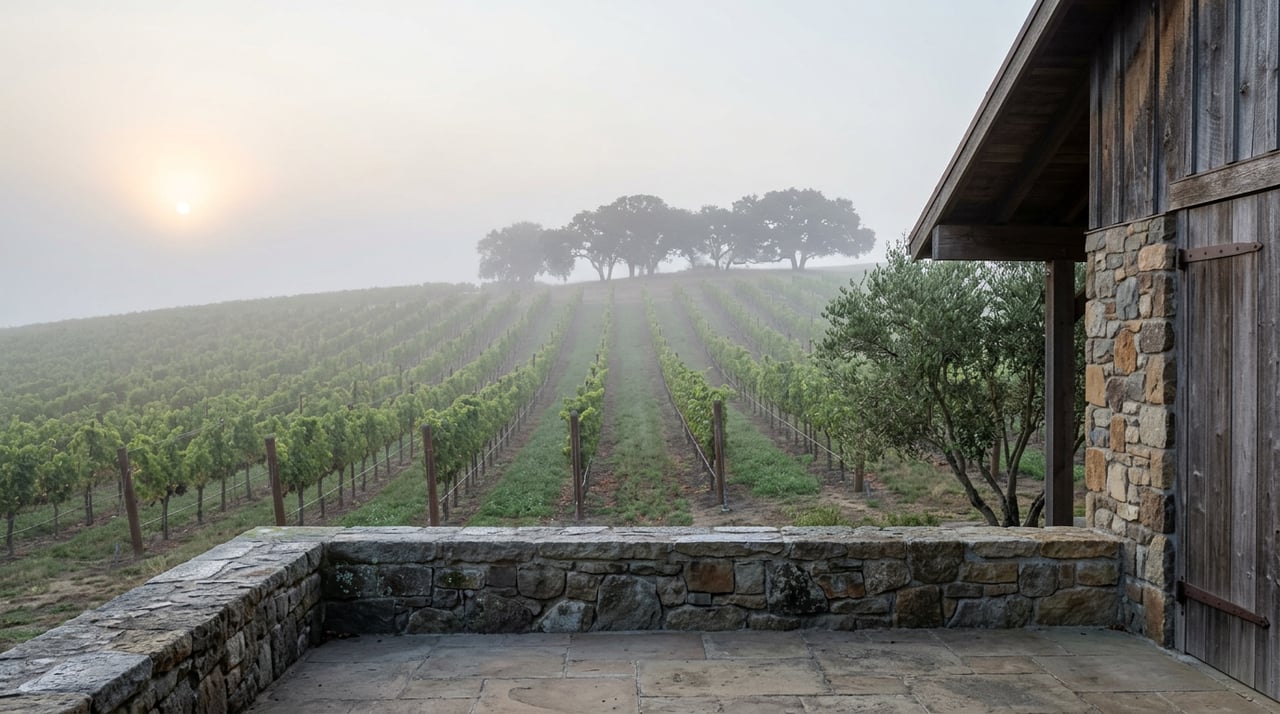
In some destinations, the wine experience sits outside town and requires planning around it. In Santa Rosa, it is woven into the city itself. Sonoma County Tourism notes that tasting rooms and winery spaces appear in downtown, in warehouse-winery clusters, and west of town near the Russian River Valley AVA.
That matters because it changes how wine country feels when you live here. Instead of treating tasting, collecting, or meeting friends over a glass as a special excursion, you can fold it into a normal afternoon or evening. The lifestyle is less about escape and more about access.
Downtown tasting is easy
Santa Rosa offers examples that make this feel concrete. Trecini Winery’s tasting room is located just two blocks east of Courthouse Square in downtown Santa Rosa, according to Sonoma County Tourism.
For you, that means a downtown walk can include coffee, errands, dinner, and a tasting room stop without ever feeling like a separate day trip. It gives the city a wine-country identity that feels integrated and local.
Industrial clusters add variety
Santa Rosa also has winery activity in warehouse-style clusters, especially in the northwest part of the city. Sonoma County Tourism identifies Carol Shelton Wines and Donelan Family Wines in that setting.
This adds another layer to the local experience. Wine culture here is not limited to scenic rural roads. It also shows up in creative urban-industrial spaces that feel active, working, and close to everyday routines.
Downtown anchors the lifestyle
For many buyers, the question is simple: what does an ordinary week look like here? In Santa Rosa, much of that answer starts in the downtown core, especially around Courthouse Square and Railroad Square.
Historic Railroad Square describes itself as Santa Rosa’s old town and notes its walkable setting, international dining, vintage shopping, theater, and close proximity to wineries. The city’s Downtown Station Area plan also points to Courthouse Square, Railroad Square, the SMART station, and the Downtown Transit Mall as central downtown assets.
Railroad Square adds historic character
Railroad Square gives Santa Rosa a sense of place that feels distinct from newer suburban retail districts. Its historic buildings and walkable layout create an environment where dining, shopping, and cultural stops sit close together.
If you value an atmosphere that feels rooted rather than manufactured, this part of the city tends to stand out. It supports a lifestyle where you can spend part of your day on foot and still have plenty of options nearby.
Dining reflects the region
Food is a major part of daily life in Santa Rosa. Visit Santa Rosa describes the local dining scene as one where fresh-from-the-farm food is standard fare, and city and tourism listings show a range from small plates to contemporary Latin flavors.
That dining culture reinforces the wine-country feel in a practical way. You are not only near vineyards. You are also in a place where local agriculture shows up regularly in restaurants, seasonal menus, and everyday meals out.
Farmers markets make it tangible
Farmers markets are another reason Santa Rosa feels connected to the land around it. Visit Santa Rosa lists a seasonal downtown farmers market at Old Courthouse Square, along with year-round markets at Mark West Springs Road, Farmers Lane, and Oakmont.
For a resident or second-home owner, that can shape the rhythm of the week. Shopping for produce, specialty foods, and local goods becomes part of the routine, which makes wine country feel lived-in rather than staged for visitors.
Culture runs deeper than tasting rooms
Wine may draw attention first, but Santa Rosa offers more than that. The Museum of Sonoma County is downtown on Seventh Street, the Luther Burbank Center for the Arts presents performances, education programs, visual art exhibits, and events, and Luther Burbank Home & Gardens stands as a registered historic landmark near City Hall and Juilliard Park.
The city’s arts program also promotes a public art walk connecting downtown Santa Rosa to Railroad Square. For you, this means free time does not have to revolve around one theme. Santa Rosa supports a broader cultural routine that can include exhibitions, performances, public art, and historic sites.
Outdoor living is built in
One of Santa Rosa’s biggest advantages is how easily outdoor recreation fits into daily life. The city highlights Howarth Park, Annadel State Park, the Russian River, and the Sonoma Coast as accessible places to hike, bike, paddle, and explore.
This is an important part of what wine country living looks like here. It is not only tastings and restaurant reservations. It is also morning trail time, an afternoon on the water, or a quick park visit without a long drive.
Parks are close to home
Howarth Park is a 138-acre community park with Lake Ralphine for fishing and boating, plus tennis and pickleball courts, picnic areas, hiking and jogging trails, and the K-Land amusement area. Nearby, Spring Lake Regional Park is one of Sonoma County’s most-visited parks, with trails, boating, picnic areas, a seasonal swimming lagoon, and trail connections to both Annadel and Howarth.
Together, these spaces create a connected system that supports frequent use. You do not need to reserve outdoor time for special weekends. It can be part of a normal weekday schedule.
Annadel shapes the local feel
Trione-Annadel State Park is a defining amenity for Santa Rosa. California State Parks describes it as a favorite for hikers and cyclists in the heart of Santa Rosa, with miles of trails for hiking, mountain biking, and trail riding.
That kind of access changes the feel of the city. Santa Rosa reads less like a place separated from nature and more like a community that lives alongside it.
Getting around supports flexibility
Lifestyle is not just about what is nearby. It is also about how easily you can move through the region. Santa Rosa’s downtown planning emphasizes two transit hubs, while Railroad Square notes access via Highway 101 and the Sonoma-Marin SMART Train.
For buyers who split time between markets, travel convenience matters even more. Charles M. Schulz–Sonoma County Airport says it is the only airport with scheduled air service into the North Bay and currently offers nonstop service to 12 destinations. That makes Santa Rosa more practical for hybrid living, weekend use, or regular travel than some smaller wine-country towns.
Santa Rosa stands apart nearby
When people compare Sonoma County locations, they often weigh charm against convenience. Smaller nearby towns may offer a more compact village feel, but Santa Rosa brings a broader set of services, transit connections, cultural institutions, dining options, and park access.
That is what makes Santa Rosa distinct in wine country. You are not choosing between a real city and a scenic setting. In many ways, you get both at once.
What an ordinary week can feel like
A typical week in Santa Rosa can include a downtown dinner, a weekend farmers market, a tasting room visit close to Courthouse Square, and trail time in Annadel or Spring Lake. It can also include airport access, transit options, and the kinds of city services that make full-time living easier.
That combination is the clearest picture of wine country living here. Santa Rosa offers a lifestyle that feels grounded, connected, and usable day after day, not only during a special getaway.
If you are considering a move, a second home, or a wine-country property strategy in Santa Rosa, the right guidance can help you evaluate not just the home itself, but how the setting supports the life you want to live. To schedule a private consultation, connect with SagePoint Real Estate Company.
FAQs
What does wine country living in Santa Rosa look like day to day?
- It typically means living in a regional city where tasting rooms, dining, farmers markets, parks, and cultural venues are close enough to enjoy as part of a normal week.
How much wine access is actually in Santa Rosa?
- Santa Rosa has wine access in downtown tasting rooms, warehouse-winery clusters, and rural areas west of town near the Russian River Valley AVA, so wine experiences are not limited to long drives.
How walkable is downtown Santa Rosa for everyday activities?
- The downtown core includes Courthouse Square and Railroad Square, where dining, shopping, transit access, and cultural stops are clustered in a more walkable setting.
What outdoor amenities shape the Santa Rosa lifestyle?
- Key outdoor amenities include Howarth Park, Spring Lake Regional Park, and Trione-Annadel State Park, which support hiking, biking, boating, and other recreation close to town.
What makes Santa Rosa different from smaller wine-country towns nearby?
- Santa Rosa combines the atmosphere of wine country with the scale, services, transit, dining, and cultural resources of a larger regional hub.
Is Santa Rosa practical for a second home or part-time use?
- Santa Rosa can be practical for part-time living because it offers regional transit connections, Highway 101 access, SMART Train access, and scheduled air service through Charles M. Schulz–Sonoma County Airport.