Why Spontaneity, Infrastructure & Long-Term Thinking Matter More Than Square Footage
The conversation usually begins with logistics: square footage, bedroom count, drive time from the Bay Area. But within fifteen minutes, the topic inevitably shifts. The spreadsheets are put away, and the real questions surface: Will we actually use this enough to justify it? Can we get there spontaneously? What happens when the kids are grown?
These aren't real estate questions. They are life design questions.
We see this pattern consistently. A client starts looking for a "vacation home," but they are really looking for a counterweight to their high-intensity daily life. The risk isn't that they will buy the wrong house; the risk is that they will buy a beautiful home that doesn't fit the reality of their schedule, leaving it empty and burdensome.
Here, we unpack the components that separate a regretful purchase from a transformative one. It requires balancing the psychology of restoration, the hard data of accessibility, and the strategic foresight to view a home not just as an asset, but as a legacy.
The Restoration Equation
At a certain level of success, the primary driver for a second home is no longer status or appreciation—it is restoration. It is the distinction between where you live and where you come alive.
We often counsel clients to move beyond a pure financial ROI to a personal one. When psychologists study luxury second home buyers, they find that the primary emotional drivers aren't about investment returns—they're about sanctuary, escape, and a sense of accomplishment that comes from creating a space entirely on your own terms.
Market data supports this shift in mindset. In 2025, 96% of luxury property specialists report that affluent clients are maintaining or increasing all-cash purchases. These buyers have moved beyond financing calculations to focus on securing a sanctuary. They aren't just parking capital; they are investing in their own resilience. Ultra-high net worth buyers in particular remain highly active, with many pursuing not just second homes but third properties as well.
However, a sanctuary is only valuable if you can actually reach it. This brings us to the most critical—and often overlooked—variable in the search.
The Spontaneity Metric
Location dominates the decision for 70% of buyers, but our analysis shows the nuance lies in access.
87% of buyers prefer driving to flying.
64% mandate a commute of under four hours.
61% want their property near water or nature, not in cities.
This reveals a critical insight we stress-test with every client: Accessibility creates utility. If a trip requires a flight, it requires planning, TSA lines, and friction. If it requires a drive, it allows for spontaneity. The goal is a refuge you can decide to visit on a Thursday afternoon and reach by Friday dinner.
Successful people aren't looking for vacation homes they'll visit once or twice a year. They're looking for accessible refuges they can reach on impulse—places that offer connection to landscape and a different rhythm entirely.
Why These Markets Deliver
This is why we consistently point to markets like Wine Country, Carmel/Monterey, and Lake Tahoe. It is not just about the scenery; it is about how each market solves the accessibility-restoration equation in distinct ways.
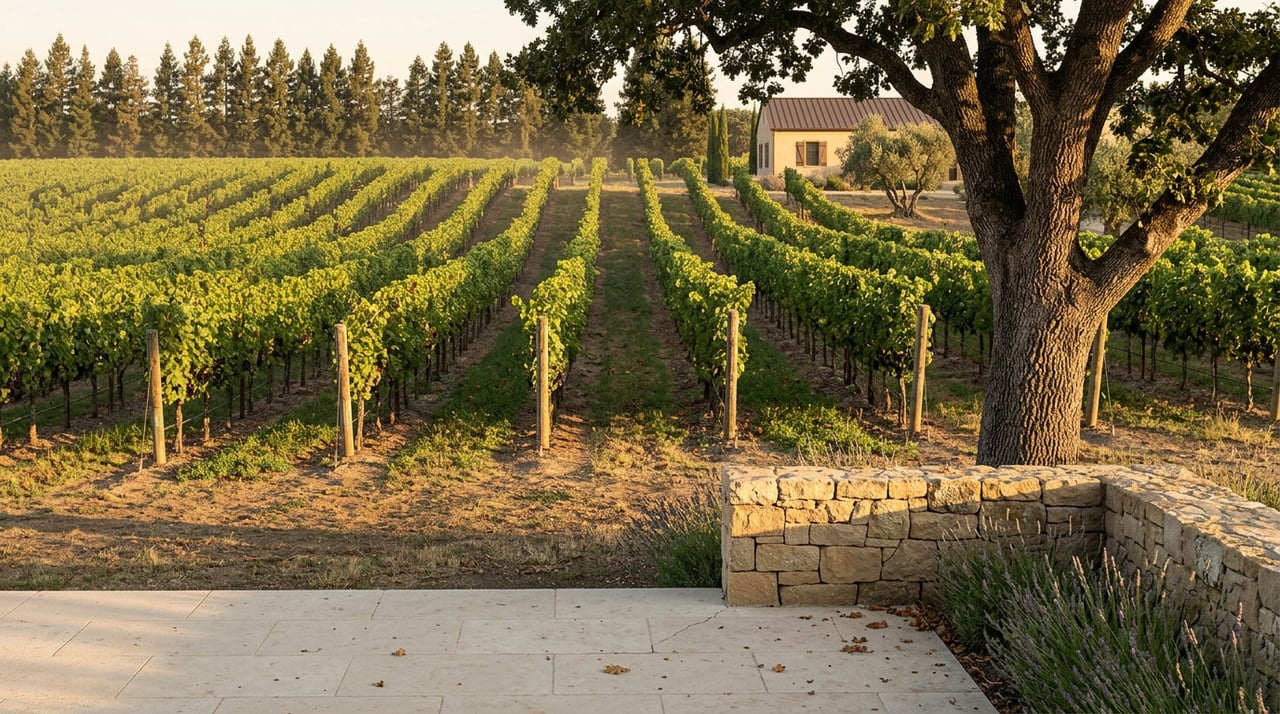
Wine Country delivers the spontaneity factor at forty-five minutes from the Golden Gate. Close enough for a Friday evening arrival, yet far enough to feel like genuine escape. Valley vistas and mountain views provide year-round beauty without seasonal limitations. The infrastructure is exceptional: Michelin-starred restaurants, world-class hospitality, cultural experiences that impress your guests and satisfy your own standards. For buyers prioritizing weekend frequency over extended stays, few markets match Wine Country's combination of proximity and sophistication.
Carmel and the Monterey Peninsula offer dramatic coastline and that distinct California coastal culture at two hours. The combination of natural beauty and established luxury services creates an environment where everything simply works. Your family is comfortable. Your weekends feel effortless. The appeal is the connection to place—that Pacific coastline, the artistic heritage, the ability to walk through town or along the beach without a car.
Lake Tahoe, at three to four hours depending on conditions, solves a different equation. Alpine beauty meets resort-level infrastructure for genuine four-season recreation. For families building memories around outdoor activities, few places match Tahoe's ability to engage multiple generations year-round. It requires slightly more commitment to reach, but delivers experiences—teaching your kids to ski, summer lake days, fall hiking—that simply aren't available closer to the Bay Area.
Each market brings something essential: proximity that enables spontaneity, infrastructure that eliminates friction, and landscapes that genuinely restore. You aren't pioneering; you are buying into regions with decades of experience serving discerning visitors. These aren't emerging speculative markets—they're established regions with demonstrated staying power, land constraints, and long-term appreciation trends that matter when you're making a decades-long decision.
The key is matching the right market to how you'll actually use the property. Weekend escapes favor proximity. Year-round engagement might prioritize climate diversity. Family gatherings need space and activities that work for multiple generations. There's no universal answer—only the right answer for your specific situation.
Future-Proofing the Asset
Buying a second home requires a fundamentally different lens than a primary residence. A primary home is optimized for immediate needs: school districts and commutes. A second home is an investment in your future self.
We approach this search with the rigor of a strategic portfolio acquisition. We look for properties that can evolve. The market has shifted from simple weekend getaways to multi-generational hubs. The most thoughtful buyers are asking: Where will we spend half the year in a decade? Is this home set up for remote work? Can it host the grandchildren we don't have yet?
Younger affluent buyers are adding new layers to this calculus, demanding integrated technology, sustainability features, and architectural distinction. They want homes that reflect their values, not just their net worth. The luxury market is responding with properties that are both beautiful and responsible, distinctive without being ostentatious.
There's also the experiential dimension that matters more as success becomes less about accumulation and more about how you spend your time. A second home isn't just a place to relax—it's a platform for engagement. Whether that's hosting intimate dinners in wine country, creating beach memories with grandchildren in Carmel, or teaching your kids to ski at Tahoe, these properties enable experiences that simply aren't possible from your primary residence.
If a property cannot adapt to these shifting life stages and priorities, its long-term value—both financial and emotional—is compromised.
A Different Kind of Expertise
We use our background in private equity, technology, and brokerage to guide this process. We don't just look at comparable sales; we look at the long arc of your life.
That cross-industry perspective reveals patterns that traditional real estate approaches miss. Private equity trains you to analyze long-term value beyond surface-level metrics—what happens to demand curves when remote work becomes permanent? How do land constraints affect twenty-year appreciation? Technology teaches you to think in systems and user experience—how will this property actually function in your life? Will the drive time kill spontaneity after the novelty wears off? Brokerage experience provides the market knowledge and execution capability to act decisively when the right opportunity emerges.
The combination lets us ask the difficult questions about usage and longevity that others might skip: Not just "Can you afford the monthly carrying costs?" but "Will you actually drive there on three-day weekends, or does that extra thirty minutes make it a six-day-minimum trip?" Not just "Is this property a good value?" but "Does this match how you'll want to spend your time in ten years?" Not just "What's the market doing?" but "What happens to your restoration space when the kids stop coming every weekend?"
We know that the "perfect" house on paper is irrelevant if it doesn't fit the rhythm of your actual life.
The Verdict
Your primary residence handles the daily grind. Your second home is where you build your legacy.
Whether it is the vineyards of Napa, the coast of Carmel, or the slopes of Tahoe, the right property solves for what truly matters: accessibility, infrastructure, and restoration. These markets aren't trendy—they're enduring. They deliver that essential quality of restoration that can't be quantified but is immediately recognizable when you find it.
The question isn't whether you can afford a second home. The question is: Have you found the place that will restore you?